
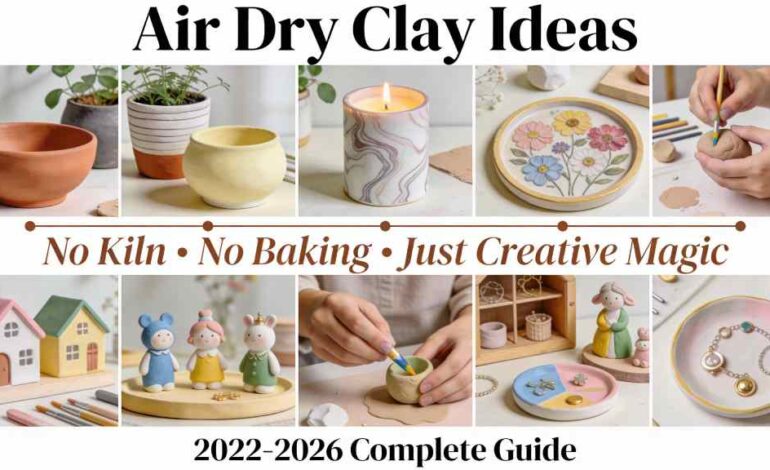
The Air Dry Clay Renaissance: A Comprehensive Guide to Mastering the Medium (2022-2026)

 Saba Mirza
Technology, Business &
Digital Marketing Writer
Saba Mirza is a Technology, Business
& Digital Marketing Writer at Lead
Loom Web with 3+ years of writing
experience covering technology,
digital marketing, business, SEO,
artificial intelligence and emerging
digital trends.
View Author Profile →
Technology, Business & Digital Marketing Writer
Saba Mirza
Technology, Business &
Digital Marketing Writer
Saba Mirza is a Technology, Business
& Digital Marketing Writer at Lead
Loom Web with 3+ years of writing
experience covering technology,
digital marketing, business, SEO,
artificial intelligence and emerging
digital trends.
View Author Profile →
Technology, Business & Digital Marketing Writer
 Sameena Begum
Health, Technology &
Digital Content Reviewer
Sameena Begum is a health, technology,
and digital content reviewer who
reviews selected articles to help
ensure that information is presented
clearly, accurately, and responsibly.
View Reviewer Profile →
Health, Technology & Digital Content Reviewer
Sameena Begum
Health, Technology &
Digital Content Reviewer
Sameena Begum is a health, technology,
and digital content reviewer who
reviews selected articles to help
ensure that information is presented
clearly, accurately, and responsibly.
View Reviewer Profile →
Health, Technology & Digital Content Reviewer
Introduction: The Air Dry Clay Revolution—From Hobby to Mainstream Creative Movement
Air dry clay has transformed from a niche craft material into a global phenomenon, capturing the imagination of millions seeking creative expression without barriers. Unlike traditional pottery requiring kilns or polymer clay needing baking, air dry clay democratizes sculpture through its most magical property: it hardens naturally when exposed to air. This accessibility—requiring no specialized equipment, expensive studio space, or technical training—has unleashed a creative revolution.
The numbers reveal a seismic shift in creative culture. The global modeling clay market (including air dry clay) reached $1.2 billion USD in 2024 and is projected to expand to $1.8 billion by 2033, growing at a steady 5.1% compound annual growth rate. More significantly, the broader handicrafts market—where air dry clay projects represent an increasingly substantial segment—hit $739.95 billion in 2024 and is expected to reach $983.12 billion by 2030.
But what catalyzed this explosive growth? Between 2022-2026, several cultural currents converged to transform air dry clay from a children’s craft into a mainstream creative outlet: the “healing economy” boom valuing therapeutic making, the rise of mindful DIY activities, social media’s visual showcase culture (#airdryclay boasts over 8 billion views on TikTok), and the democratization of artistic expression through accessible materials. This guide explores innovative air dry clay ideas, market evolution, and practical pathways from first touch to professional practice.
What Is Air Dry Clay? Understanding Your Medium
Air dry clay is a water-based, moldable substance that hardens through evaporation. Its chemical composition varies by brand but typically includes natural minerals (like clay and talc), cellulose fibers, and polymers. Unlike polymer clay (requiring oven baking at 110-120°C for 25-30 minutes) or traditional ceramics (needing kiln firing at 1000°C+), air dry clay completes its transformation through air exposure alone.
Key Properties Explained:
- No heat source required – The ultimate accessibility feature
- Typical drying time – 24-48 hours at room temperature for pieces up to 1cm thick; thicker pieces require longer and strategic drying (rotate periodically)
- Workability window – 15-30 minutes of optimal malleability once unpackaged; can be rehydrated with water if it dries prematurely
- Paintability – Accepts acrylic, watercolor, gouache, and ink beautifully after drying; prime with gesso for smoother painting surfaces
- Limitations – Not waterproof or food-safe unless sealed with specific sealants; more fragile than fired ceramics
- Cost efficiency – Typically $2-8 per pound versus $15-30+ for quality polymer clay
2025 Brand Landscape:
- Premium Tier: DAS Air Dry Clay (German, professional-grade durability), La Doll Premier (Japanese, exceptional smoothness)
- Mid-Tier: Sculpey Air Dry (consistent quality), Activa Plus (excellent for fine details)
- Beginner/Value: JOVI Clay, Crayola Air Dry (great for kids and experimentation)
- Specialty: Creative Paper Clay (hybrid paper-clay, ultra-light), Makins Clay (professional ultra-light)
Materials & Tools Deep Dive: Building Your Clay Toolkit
Essential Starter Kit (Under $30):
- Clay selection: 2-3 colors minimum (white, terracotta, grey)
- Work surface: Non-stick silicone mat or acrylic sheet
- Basic tools: Rolling pin (or acrylic tube), craft knife, scoring tool (toothpick works), smoothing tool (old paintbrush handle)
- Texturing items: Household objects (lace, leaves, stamps)
- Finishing supplies: Acrylic paints, brushes, water-based varnish
Pro Tips for Beginners:
- Storage: Keep unused clay in airtight containers with a damp cloth to prevent premature drying
- Thickness: Never exceed 1.5cm thickness unless creating armatures (support structures) from foil or cardboard
- Joining: Score surfaces and use “slip” (clay watered to paste consistency) as glue for strong bonds
- Drying strategy: Rotate pieces every 12 hours to prevent warping; dry away from direct heat sources
- Cracking prevention: Slow, even drying is key; cover pieces loosely with plastic wrap for first 12 hours
Expanded Project Gallery: 15+ Innovative Ideas with Step-by-Step Visual Guidance
Category 1: Decorative Home Décor (Advanced Beginner)
1. Pressed Flower Clay Trays with Botanical Preservation
Visual Steps:
- Kneading: Show clay being softened in hands (photo: hands with clay ball)
- Rolling: Demonstrate even 1/4″ thickness using guide sticks (photo: rolled clay with thickness guides)
- Pressing: Arrange flowers face-down, press gently with rolling pin (photo: flowers being pressed)
- Shaping: Create raised edges using coil technique (photo: clay coil being attached)
- Drying: Show piece on drying rack with airflow (photo: piece elevated on grid)
- Reveal: Carefully remove dried flowers (photo: flower lifting away leaving impression)
- Finishing: Paint highlights, seal with matte varnish (photo: before/after sealing)
Beginner Variation: Use simple leaf impressions instead of delicate flowers
2. Modern Textured Wall Art
Create geometric wall pieces using cardboard templates and texture plates.
Technique Highlight: Layer different colored clays thinly for “geode” effects when carved into.
3. Clay-Coated Vessels
Transform ordinary glass jars or bottles by coating them with thin clay layers, then carving patterns before drying.
Pro tip: Use mod podge as adhesive between glass and clay.
Category 2: Wearable Art & Personal Adornment (Intermediate)
4. Statement Earrings with Caning Technique
Visual Steps for Caning:
- Color stacking: Layer different colored clay sheets (photo: rainbow stack)
- Reduction: Stretch and reduce the stack to create pattern miniaturization (photo: pattern getting smaller as clay stretched)
- Slicing: Cut thin slices with blade (photo: clean slice revealing pattern)
- Baking consideration: Note that air dry clay jewelry benefits from resin coating for durability
5. Personalized Signature Rings
Create ring bases, then impress handwriting or fingerprints into soft clay. Paint with metallic accents for heirloom-quality pieces.
6. Clay Bead Making with Marbling Effects
Roll different colored clays into ropes, twist lightly, then slice into beads. Use straws to create consistent holes.
Category 3: Functional Wares with Character (Mixed Skill)
7. Narrative Coaster Sets
Create 4-6 coasters telling a visual story through bas-relief carving.
Example: Moon phases, seasonal transitions, or oceanic themes.
8. Bookend Sculptures
Build substantial pieces around foil armatures to reduce weight and drying time.
Popular 2025 themes: Stacked books, abstract mountains, sleeping animals.
9. Desk Organizer Systems
Modular components that interlock: pen holder, tray, phone stand. Use consistent color palette and texture for cohesive look.
Category 4: Seasonal & Holiday Creations (Beginner-Friendly)
10. Autumn Leaf Mobile
Create realistic leaves using actual leaves as molds. Attach with varying lengths of thread to driftwood branch.
11. Winter Luminary Houses
Cut house silhouettes from rolled clay, carve window patterns, place over LED tea lights for magical glow.
12. Spring Bloom Magnets
Floral designs using simple cane techniques sliced thin and backed with magnets. Perfect for Mother’s Day gifts.
Category 5: Educational & Experimental Projects
13. Architectural Models
Recreate famous building facades or design dream homes. Excellent for understanding structure and scale. For parents looking for more ideas on supporting toddlers through age-appropriate learning and development, resources such as the best parenting books for toddlers can provide additional guidance on encouraging creativity, independence, and hands-on exploration.
14. Clay Animation “Claymation” Characters
Create expressive characters with wire armatures, allowing for posing after drying.
15. Mixed Media Assemblage
Combine clay elements with found objects, textiles, or natural materials for textured wall pieces.
Case Study Expansion: Emma’s Visual Content Strategy Breakdown
Emma’s growth wasn’t accidental—her content strategy followed these visual principles:
2023 Content Formula (Gaining Traction):
- Process Videos: 60-second clips showing satisfying clay techniques
- Before/After Grids: Instagram posts contrasting raw clay with finished painted pieces
- Workshop Teasers: Short clips demonstrating one specific technique
2025 Advanced Strategy (Monetizing Attention):
- Tutorial Series: 5-part YouTube series “From Clay to Gallery”
- POV Crafting: First-person view videos creating entire pieces
- Problem-Solving Content: Addressing common issues like cracking or paint adhesion
Visual Platform Specifics:
- TikTok: Quick cuts, satisfying texture shots, trending audio
- Instagram Reels: Higher production value, educational focus
- Pinterest: Well-lit flat lays, step-by-step infographics
- YouTube: Detailed tutorials, studio vlogs, tool reviews
Step-by-Step Master Project: Marbled Candle Holder with Photo Descriptions
Project Level: Advanced Beginner
Time: 45 minutes active, 72 hours drying
Cost: $3.50 materials
Visual Step-by-Step:
Step 1: Color Preparation (Photo: Three colored clay balls arranged)
- Condition three complementary colors (example: terracotta, cream, sage)
- Knead each until pliable, about 2 minutes per color
Step 2: Initial Marbling (Photo: Clays stacked and roughly twisted)
- Layer colors in random order
- Twist once or twice—do not overmix
- Flatten with rolling pin
Step 3: Coil Formation (Photo: Beautifully marbled sheet being rolled into coil)
- Roll marbled sheet into consistent coil approximately 1″ thick
- Smooth seam with damp finger
Step 4: Base Creation (Photo: Coil circled into spiral base)
- Form coil into spiral base for stability
- Ensure bottom is flat for even standing
Step 5: Wall Building (Photo: Second coil layered atop first)
- Add second coil atop first, slightly inward to create tapered shape
- Blend seams between coils carefully
Step 6: Candle Impression (Photo: Votive candle being pressed into center)
- Press candle into center to create perfect-sized indentation
- Smooth interior with thumb
Step 7: Texture Addition (Photo: Texturing tool creating pattern on exterior)
- Add geometric patterns or organic textures to exterior
- Consider contrasting smooth and textured areas
Step 8: Drying Setup (Photo: Piece elevated on cooling rack with plastic tent)
- Place on breathable surface, cover loosely with plastic
- Rotate 90° every 12 hours
Step 9: Finishing (Photo: Finished piece with candle glowing)
- Lightly sand any rough edges after drying
- Seal with heat-resistant varnish if using actual candles
- Display with LED or real candle
Troubleshooting Gallery: Common Issues with Visual Solutions
Problem: Cracking during drying
Visual Solution: Show proper thickness measurement, foil armature construction, and gradual drying setup
Problem: Pieces warping
Visual Solution: Demonstrate flipping pieces during drying, using weighted edges, and proper surface preparation
Problem: Paint chipping
Visual Solution: Show proper sealing sequence: sanding → priming → painting → varnishing
Problem: Weak joints
Visual Solution: Demonstrate scoring technique, slip application, and reinforcement with extra clay
The Therapeutic Dimension: Why Clay Work Heals
Beyond market trends, the air dry clay resurgence taps into deep human needs:
Neurological Benefits:
- Tactile stimulation activates somatosensory cortex, grounding anxious minds
- Repetitive motions (kneading, smoothing) induce meditative states
- Creative problem-solving engages prefrontal cortex without stress
Psychological Framework:
- Tangible accomplishment in digital world
- Imperfection acceptance through material’s forgiving nature
- Flow state accessibility with low skill barrier to entry
Social Prescription:
Increasingly recommended by therapists as adjunct to traditional mental health treatment, particularly for anxiety, trauma recovery, and ADHD management.
Air Dry Clay Market Evolution & Research Data (2024-2026)
| Year | Global Air Dry Clay Market Size (Segment) | Broader Handicrafts/ Craft Market Context | Key Driving Trends & Consumer Behavior | E-Commerce & Platform Dynamics | Creator Economy & Business Outlook |
| 2024 | $450 – $500 Million (within global modeling clay market of ~$1.2B). | Global handicrafts market valued at $739.95 Billion. Ultra-light clay variants see 6-8% CAGR. | “Healing Economy” peaks. Post-pandemic, therapeutic DIY is mainstream. Social media (#airdryclay) drives visibility. Demand shifts from kids’ craft to adult mindfulness and home décor. | E-commerce dominates 35-40% of craft sales. Platform saturation begins on Etsy; algorithm changes on Instagram/TikTok hurt organic reach for new creators. Supply chain issues for premium clays persist. | Professionalization begins. Hobbyists transition to microbusinesses. Revenue models expand (subscription boxes, workshops). Challenge: Increased competition and rising shipping costs (+15-20%). Success requires consistency and basic branding. |
| 2025 | $600 – $650 Million (projected growth). Modeling clay market overall hits ~$1.2B. | Arts/Crafts market estimated at $54 Billion. Sustainability becomes a major purchasing factor. | Differentiation & Aesthetics. “Scandinavian minimal,” “cottagecore,” and “biophilic” designs trend. Hybrid techniques (clay + resin, clay + paper) gain popularity. Eco-friendly formulations enter mainstream. | E-commerce share exceeds 40%. TikTok Shop integration becomes critical for sales. Creator content must be optimized for short-form video algorithms. Online workshops see high adoption. | Niche dominance is key. Market saturation at entry-level. Creators must specialize (e.g., jewelry, planters, fine art). Revenue diversifies (kits, wholesale, digital tutorials). Top creators leverage Patreon, branded kits, and local teaching. Profit margins tighten as professionalization costs rise. |
| 2026 | $700 – $800 Million (projected). Sustained growth as material innovations continue. | Handicrafts market projected at $983.12 Billion by 2030. “Smart” and sustainable crafts gain traction. | Tech Integration & Sustainability Mandate. AR/VR tutorials and AI design assistants emerge. “Plantable” biodegradable clay and conductive clays are R&D foci. Consumer demand mandates eco-credentials and durability. | E-commerce stabilizes at 42-45% share. Multi-channel presence (Etsy, Amazon Handmade, own site) is standard. Live shopping via social platforms drives impulse buys. | Micro-influencer scale. Successful creators treat craft as full business with systems. Revenue streams: direct sales, kits, licensing, speaking. Barrier to entry rises due to need for professional presentation, marketing, and tech adoption. Wholesale to boutiques and retail partnerships become viable growth channels. |
Supporting Research & Contextual Insights (2024-2026)
Psychological & Wellness Drivers (Consistent 2024-2026):
- Clinical Recognition: Crafting is increasingly recommended in therapeutic settings for anxiety, depression, and PTSD. The tactile, focused nature of clay work is linked to reduced cortisol levels and increased flow states.
- Digital Detox Demand: As screen time increases, the demand for analog, hands-on hobbies provides a counterbalance, fueling market growth.
Material Science & Innovation Pipeline:
- 2024: Focus on improving strength and reducing cracking in air dry clays. Introduction of more “ultra-light” formulas.
- 2025: Cross-material experimentation peaks (e.g., clay with embedded fibers, mica powders). Home-sealant products marketed specifically for waterproofing air dry clay appear.
- 2026: R&D into “smart materials” begins, such as clays that change color with temperature or integrate with simple electronics for interactive art.
Economic Model Evolution for Creators:
- 2024: Product Sales Model. Majority of revenue from direct sales of finished goods on platforms like Etsy.
- 2025: Hybrid Model. Revenue splits between product sales, DIY kits, and virtual workshops. Community building (via Discord, Patreon) becomes a value-add.
- 2026: Brand & IP Model. Top creators generate income through licensing designs, selling physical kits in retail stores, and serving as brand ambassadors for clay manufacturers. The business shifts from making all the items to managing a brand.
Demographic & Geographic Expansion:
- Primary Users (2024): Predominantly women, ages 25-45, in North America and Western Europe.
- Expansion (2025-2026): Growth in male and older adult (65+) participation. Significant market expansion in Asia-Pacific and Latin America as internet access and e-commerce logistics improve.
Monetization Pathways for 2026 and Beyond
Emerging Revenue Streams:
- Digital Product Expansion: AR tutorials where users can project designs onto clay
- Clay Subscription 2.0: Themed monthly kits with virtual workshop access
- Corporate Wellness Programs: Providing clay workshops for employee stress reduction
- Licensing Designs: Pattern libraries for other creators
- Sustainable Clay Line Development: Creating proprietary eco-friendly formulas
Platform-Specific Strategies:
- TikTok Shop: Live crafting sessions with immediate purchase options
- Instagram: Shoppable Reels with augmented reality try-ons for jewelry
- Etsy: Digital downloads of original texture plates and design templates
- Local Markets: Workshops paired with material sales for recurring revenue
Future Trends: Where Air Dry Clay Is Headed (2026-2030)
Material Innovations:
- Biodegradable clays with embedded seeds for plantable sculptures
- Conductive clays for incorporating simple circuits and lighting
- Temperature-responsive clays that change color
Technological Integration:
- 3D printing hybrids using clay as finish layer over printed structures
- VR sculpting previews allowing digital prototyping before physical creation
- AI design assistants suggesting personalized project ideas based on skill level
Cultural Shifts:
- Intergenerational crafting as families seek shared analog activities
- Climate expression through pieces that visualize environmental data
- Digital-physical hybrids where NFT owners receive physical clay counterparts
Conclusion: Your Journey in the Clay Renaissance
Air dry clay’s evolution from simple craft to cultural phenomenon represents more than market growth—it signifies a collective yearning for tangible creation in an increasingly digital world. The material’s accessibility democratizes artistic expression while its therapeutic benefits address contemporary mental health needs.
Whether you approach air dry clay as:
- A mindfulness practice for stress relief
- A creative outlet without financial or technical barriers
- A side business in the growing creator economy
- An educational tool for developing spatial intelligence
The medium offers unparalleled versatility. The projects in this guide provide starting points, but the true magic emerges when you imprint your unique vision onto this most malleable of materials.
Final Pro Tip: Document your first year. Photograph every piece, note what worked and failed, track your skill progression. In twelve months, you’ll have not just a portfolio of creations, but a visual diary of creative growth—a testament to clay’s transformative power, both for the material and the maker.
The air dry clay revolution continues to expand, limited only by imagination and drying space. Your contribution to this creative movement begins with a simple act: opening that first package, feeling the cool clay in your hands, and beginning to shape something new—both in the material and in yourself.
Saba Mirza is a Technology, Business & Digital Marketing Writer at Lead Loom Web with 3+ years of writing experience. Her work covers technology, digital marketing, SEO, business growth, artificial intelligence and emerging digital trends.
Author Profile →
Sameena Begum is a health, technology, and digital content reviewer who reviews selected articles to help ensure that information is presented clearly, accurately, and responsibly.
Reviewer Profile →