


Affiliate marketing remains one of the most scalable online business models for beginners. You don’t need to create your own product, manage inventory, or handle customer service. Instead, you promote other companies’ products and earn a commission for every sale or lead generated through your unique affiliate link.
This in-depth guide explains how affiliate marketing works, how to start from scratch, and how to build a sustainable income stream in 2026.
What Is Affiliate Marketing?
Affiliate marketing is a performance-based marketing model where:
- A merchant sells a product or service.
- An affiliate (you) promotes the product.
- A customer purchases through your unique link.
- You earn a commission.
How Affiliate Marketing Works (Step-by-Step)
- You join an affiliate program.
- You receive a unique tracking link.
- You promote the product through content (blog, YouTube, social media).
- Someone clicks your link and makes a purchase.
- You earn a commission.
Tracking is done through cookies and affiliate dashboards, which record clicks, conversions, and payouts.
Why Affiliate Marketing Is Perfect for Beginners
Affiliate marketing is attractive because:
- Low startup cost
- No inventory required
- Work from anywhere
- Passive income potential
- Scalable over time
Unlike dropshipping or ecommerce, you don’t deal with logistics or refunds. Your primary focus is traffic and conversions.
How to Start Affiliate Marketing as a Beginner
Step 1: Choose a Profitable Niche
A niche is your specific topic focus. Popular beginner-friendly niches include:
- Digital marketing
- Personal finance
- Health & fitness
- Tech gadgets
- Online tools and software
Choose a niche that has:
- Strong demand
- Affiliate products available
- Long-term growth potential
Avoid overly broad niches like “fitness” — instead target “home workouts for beginners” or “budget fitness gear.”
Step 2: Join the Best Affiliate Programs
Here are beginner-friendly affiliate networks:
- Amazon Associates – Ideal for physical products with massive catalog access.
- ClickBank – Popular for digital courses and high commissions.
- CJ Affiliate – Large network with global brands.
- ShareASale – Good for niche products.
- Impact – Advanced tracking and premium brands.
When selecting a program, evaluate:
- Commission rate
- Cookie duration
- Product demand
- Refund rates
- Conversion rates
Step 3: Build Your Platform
You can promote affiliate products using:
- A blog website
- YouTube channel
- Instagram page
- Email marketing funnel
- Niche review site
For long-term sustainability, a blog optimized for SEO is the most stable strategy.
Step 4: Drive Traffic
Traffic is the foundation of affiliate income.
1. SEO (Search Engine Optimization)
SEO brings free organic traffic from Google. Focus on:
- Keyword research
- Product review articles
- Comparison posts
- Buying guides
- Informational content
Use tools like:
- Ahrefs
- SEMrush
Target long-tail keywords such as:
- “Best affiliate marketing tools for beginners”
- “How to start affiliate marketing with no money”
2. YouTube Marketing
YouTube works extremely well for:
- Product reviews
- Tutorials
- Comparisons
- Case studies
Video builds trust faster than text.
3. Social Media
Platforms like Instagram, Pinterest, and Facebook help promote affiliate links through:
- Reels
- Short videos
- Carousel posts
- Niche pages
4. Email Marketing
Building an email list increases long-term revenue. Use tools like:
- ConvertKit
- GetResponse
Email allows repeated promotion without relying on algorithms.
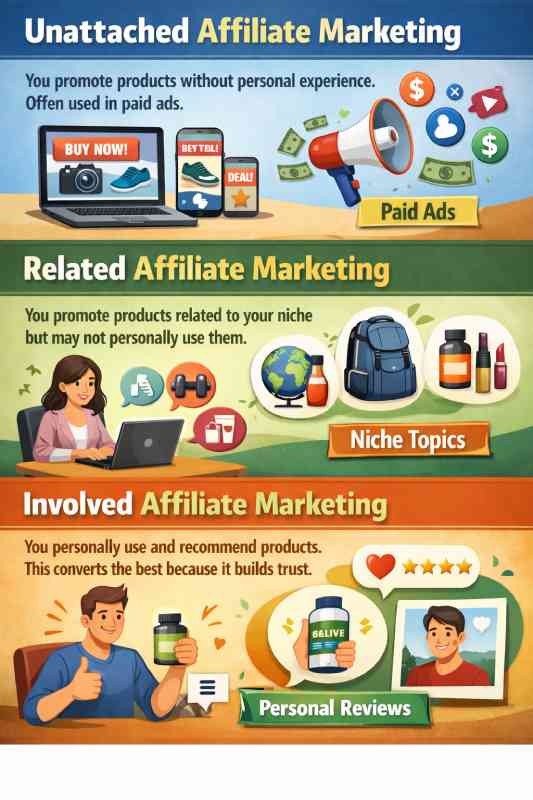
Types of Affiliate Marketing
How Much Can You Earn from Affiliate Marketing?
Income varies widely.
Commission Structures
- CPS (Cost Per Sale)
- CPA (Cost Per Action)
- CPL (Cost Per Lead)
- Recurring commissions (monthly subscriptions)
Beginner Income Expectations
- First 3 months: Learning phase
- 3–6 months: First commissions
- 6–12 months: Consistent traffic growth
- 1–2 years: Scalable income potential
Many affiliates earn:
- $100–$500/month in early stages
- $1,000–$5,000/month after consistent effort
- High-level affiliates earn six figures annually
Consistency and SEO authority determine growth.
Affiliate Marketing Without a Website
You can start without a website using:
- Instagram niche pages
- TikTok short videos
- YouTube Shorts
- Pinterest pins
- Email funnels
- Paid ads
However, owning a website gives you control and long-term stability.
Best Affiliate Marketing Strategies in 2026
1. Product Review Articles
Example:
- “Best Email Marketing Tools for Beginners”
- “Ahrefs vs SEMrush Comparison”
2. Comparison Content
- Product A vs Product B
- Alternatives articles
3. Problem-Solution Content
Target pain points:
- “How to increase website traffic”
- “How to rank on Google fast”
4. AI-Assisted Content (Carefully Optimized)
AI tools help draft content, but:
- Add personal insights
- Add case studies
- Include original screenshots
- Avoid generic content
Common Affiliate Marketing Mistakes to Avoid
- Choosing the wrong niche
- Ignoring SEO
- Promoting too many products
- Not tracking analytics
- Expecting instant results
- Not building trust
Affiliate marketing is a long-term digital asset, not a quick scheme.
Affiliate Marketing vs Dropshipping
| Factor | Affiliate Marketing | Dropshipping |
|---|---|---|
| Inventory | Not required | Required supplier |
| Customer Support | No | Yes |
| Startup Cost | Low | Moderate |
| Profit Margin | Medium | Variable |
| Risk Level | Low | Higher |
Is Affiliate Marketing Still Profitable in 2026?
Yes — but competition has increased.
What works today:
- High-quality SEO content
- Authority niche sites
- Personal branding
- YouTube + blog combination
- Email list building
Google prioritizes:
- Helpful content
- Experience-based reviews
- Topical authority
- Trust signals
If you focus on value, affiliate marketing remains highly profitable.
Frequently Asked Questions
Is affiliate marketing free to start?
Yes. Most affiliate programs are free to join.
How long does it take to make money?
Typically 3–6 months with consistent effort.
Do I need investment?
You can start free, but investing in hosting, tools, and SEO speeds growth.
Can beginners really make money?
Yes — with patience, strategy, and consistent content production.
Final Thoughts
Affiliate marketing is not a shortcut to fast money — it is a digital business model that rewards consistency, strategy, and audience trust.
To succeed:
- Choose a focused niche
- Create valuable SEO content
- Promote trusted products
- Build an email list
- Think long-term
If you treat affiliate marketing like a real business rather than a side experiment, it can generate sustainable income for years.