
15°C New York
December 9, 2025
Small Business Web Design Project: Building a Strong Online Foundation
Business

Small Business Web Design Project: Building a Strong Online Foundation

Dec 8, 2025

Launching a small business in today’s digital world means more than just having a great product or service — it requires a powerful online presence. A professional, well-structured website helps businesses attract new customers, build trust, and compete with larger brands. Whether you are a new entrepreneur or revamping an existing brand, a small business web design project is the first step toward long-term online success.

Understanding the Importance of Web Design for Small Businesses

Your website acts as the digital storefront for your business. Often, it’s the first place potential customers visit before deciding to buy or contact you. For small businesses, a website isn’t a luxury — it’s a necessity.

A good web design enhances brand credibility, improves user experience, and boosts visibility in search engines. Consumers tend to judge a company’s reliability based on its website’s look and feel. A professional design shows you’re serious about your business, while a poorly structured site can turn visitors away instantly.

Key benefits of a well-designed website for small businesses include:

  • Enhanced online visibility: It helps your business appear in search results for relevant local or industry-specific queries.

  • Better customer engagement: A strategic design includes call-to-action (CTA) sections, live chat, and easy navigation that encourage users to interact.

  • Improved conversion rate: Well-placed elements, professional visuals, and user-centric features guide users toward making a purchase or inquiry.

  • Brand identity: The color scheme, typography, and layout reflect your brand’s personality, making it memorable and trustworthy.

Planning the Small Business Web Design Project

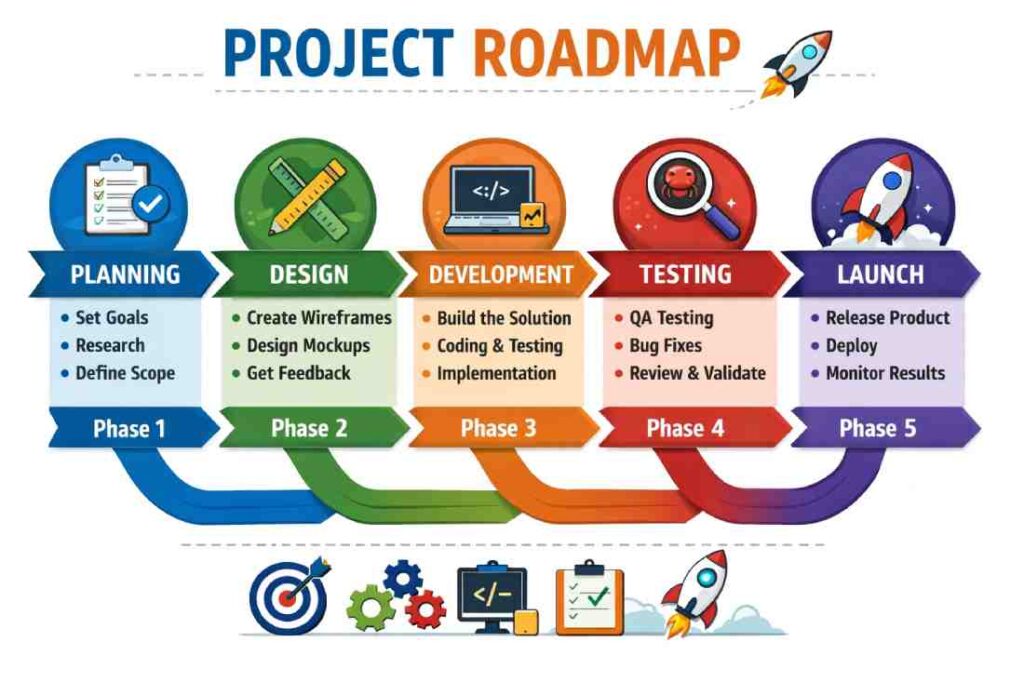
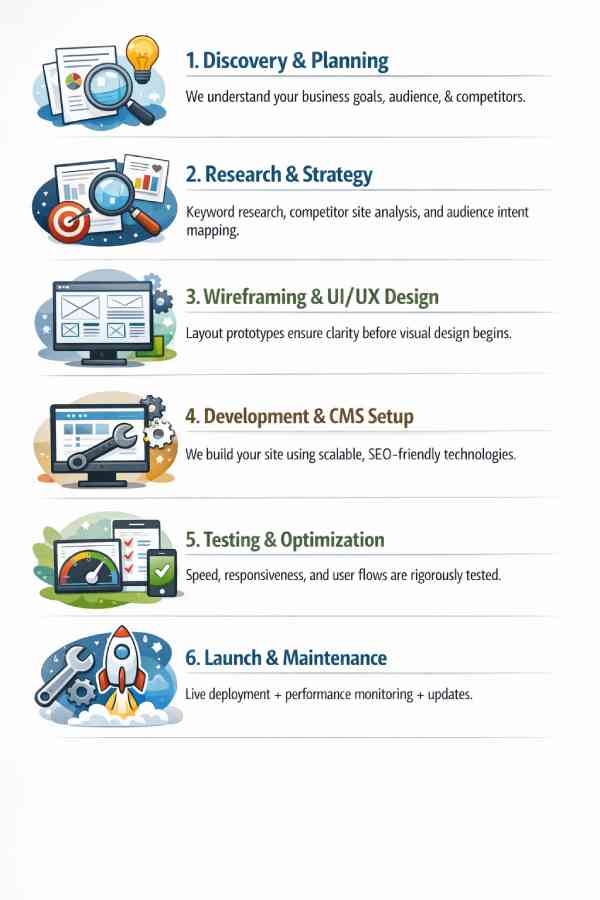
Every successful website starts with a proper plan. Before diving into development, define clear goals and requirements. The planning stage ensures that every element serves your business objectives.

Key steps in the planning stage:

  1. Define your target audience: Determine who your customers are — their age, location, interests, and online behavior. This helps create a user experience tailored to their needs.

  2. Set measurable goals: Identify what you want to achieve. It could be increasing online sales, collecting leads, or improving bookings.

  3. Choose your domain name wisely: Keep it short, relevant, and easy to remember. A domain matching your business name enhances brand recognition.

  4. Decide on website structure: Plan your main pages (Home, About, Services, Blog, Contact, etc.) and how they will link together.

  5. Budget and resources: Small businesses should allocate a realistic budget covering design, development, hosting, maintenance, and marketing.

Planning not only saves time but also reduces unnecessary redesigns later. Having a professional web design strategy sets a solid foundation for future growth.

Designing an Effective Small Business Website

Good design combines aesthetics with functionality. It’s not just about how a website looks but also how it performs for users and search engines. Here are the essential design components to focus on:

1. User-friendly layout

Your website should be easy to navigate, with clear menus and logical page hierarchy. Visitors should find what they’re looking for within two or three clicks. Use a clean layout that doesn’t overwhelm users with too much information at once.

2. Mobile responsiveness

A responsive design ensures your site adapts perfectly to smartphones, tablets, and desktops. With over 60% of web traffic coming from mobile devices, responsive design is critical for engagement and ranking.

3. Visual appeal

Use high-quality images, professional fonts, and a consistent color palette. Colors should reflect your brand identity—blue conveys trust, red signals energy, and green suggests growth.

4. Fast loading speed

Website speed affects both user satisfaction and SEO. Optimize images, use caching plugins, and invest in reliable hosting to ensure your pages load within three seconds.

5. SEO-friendly structure

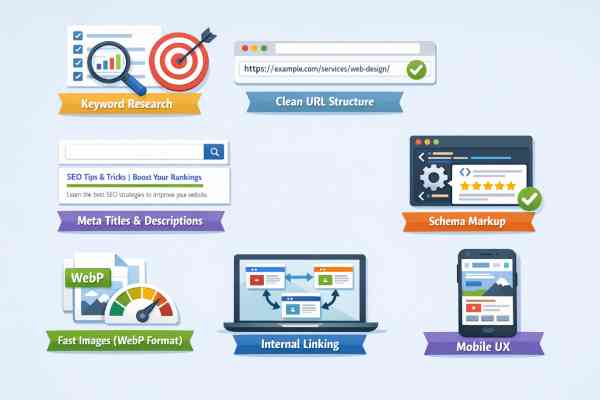
A small business website should include optimized titles, meta descriptions, internal linking, and schema markup to improve search visibility. Integrating location-based keywords helps local customers easily find you.

Content Creation and Messaging

Compelling website content connects your business to your audience. Each page must clearly communicate your value proposition — what makes your business unique and why customers should choose you.

Essential content elements:

  • Homepage: Provide a summary of your services with attention-grabbing visuals and a strong call-to-action.

  • About us: Share your story, mission, and values to build trust with visitors.

  • Service pages: Explain each service in detail using simple language and benefit-driven descriptions.

  • Testimonials and case studies: Include reviews or portfolio examples that demonstrate credibility.

  • Blog section: Publish SEO-optimized articles that answer customer questions and position your business as an industry authority.

In small business web design, clarity beats complexity. Avoid jargon and focus on building genuine connections through meaningful storytelling.

Development and Technical Considerations

Once the design and content are approved, development transforms static layouts into dynamic, interactive pages. Most small business websites are built using platforms like WordPressWix, or Shopify, depending on whether the site is informational or e-commerce-based.

Essential development steps include:

  • CMS setup: Select a content management system that makes editing and updates easy without needing coding knowledge.

  • Plugin and feature integration: Add contact forms, booking functionality, chatbots, and analytics tools.

  • Security measures: Use HTTPS, regular backups, and firewall protection to safeguard data.

  • Testing and quality assurance: Check usability, browser compatibility, and functionality on different devices before launch.

Technical SEO elements like XML sitemaps, alt text, and clean URLs should also be integrated during development.

Launching and Marketing Your Website

After completing all design and development tasks, the next step is launching your site and marketing it effectively. Launch day should include a thorough checklist — testing forms, ensuring mobile compatibility, and confirming that all links work.

Post-launch marketing activities:

  • Optimize Google Business Profile for local searches.

  • Submit your website to Google Search Console and Bing Webmaster Tools.

  • Implement on-page SEO and start acquiring backlinks through guest posts or directory submissions.

  • Run small-scale advertising campaigns on Google Ads or social media.

  • Monitor website analytics to see how users interact and which pages perform best.

A strong post-launch marketing strategy ensures that your small business website starts gaining visibility and generating leads quickly.

Maintenance and Continuous Improvement

A website is never truly finished; it evolves with your business. Regular maintenance ensures security, speed, and improved performance. Small businesses should plan monthly updates for plugins, backups, and content revisions.

You should also review analytics data to identify user behavior trends. For example, if visitors frequently abandon your contact page, simplify your form or add live chat support. Similarly, fresh blog content and keyword updates keep your site relevant to both users and search engines.

Final Thoughts

A small business web design project is one of the most valuable investments any entrepreneur can make. It lays the groundwork for digital growth, enhances credibility, and helps attract a steady stream of customers. With the right combination of planning, design, content, and marketing, even the smallest venture can compete effectively online.

Building a professional website is no longer optional—it’s the cornerstone of success in the modern marketplace.