
The Empathetic Marketing

 Saba Mirza
Technology, Business &
Digital Marketing Writer
Saba Mirza is a Technology, Business
& Digital Marketing Writer at Lead
Loom Web with 3+ years of writing
experience covering technology,
digital marketing, business, SEO,
artificial intelligence and emerging
digital trends.
View Author Profile →
Technology, Business & Digital Marketing Writer
Saba Mirza
Technology, Business &
Digital Marketing Writer
Saba Mirza is a Technology, Business
& Digital Marketing Writer at Lead
Loom Web with 3+ years of writing
experience covering technology,
digital marketing, business, SEO,
artificial intelligence and emerging
digital trends.
View Author Profile →
Technology, Business & Digital Marketing Writer
 Sameena Begum
Health, Technology &
Digital Content Reviewer
Sameena Begum is a health, technology,
and digital content reviewer who
reviews selected articles to help
ensure that information is presented
clearly, accurately, and responsibly.
View Reviewer Profile →
Health, Technology & Digital Content Reviewer
Sameena Begum
Health, Technology &
Digital Content Reviewer
Sameena Begum is a health, technology,
and digital content reviewer who
reviews selected articles to help
ensure that information is presented
clearly, accurately, and responsibly.
View Reviewer Profile →
Health, Technology & Digital Content Reviewer
What is Empathetic Marketing?
Empathetic marketing is a customer-centric strategy that focuses on understanding and addressing your audience’s emotional needs, challenges, and aspirations. Unlike traditional marketing that emphasizes features and benefits, empathetic marketing prioritizes the human experience behind purchasing decisions. This approach involves deep listening, genuine concern for customer wellbeing, and messaging that resonates on a personal level, ultimately building trust and loyalty through authentic relationships rather than transactional interactions.
Why Empathy Matters in Modern Marketing
In today’s saturated digital landscape, consumers face overwhelming amounts of impersonal advertising. Research indicates that 65% of customers feel inundated with irrelevant brand messages, while only 30% of brands effectively incorporate empathy into their campaigns. This gap represents a significant opportunity for brands that genuinely connect with their audience’s emotional reality.
The Psychological Framework
Empathetic marketing operates across three psychological dimensions:
- Cognitive Empathy: Understanding what your customers feel and why
- Emotional Empathy: Sharing and validating those feelings through messaging
- Compassionate Empathy: Taking actionable steps to provide meaningful support
Brands that master all three dimensions create genuine trust rather than superficial emotional responses.
The Empathetic Marketing Framework
Implement empathetic marketing systematically using this actionable framework:
Phase 1: Deep Audience Understanding
Conduct emotional audience research beyond demographics:
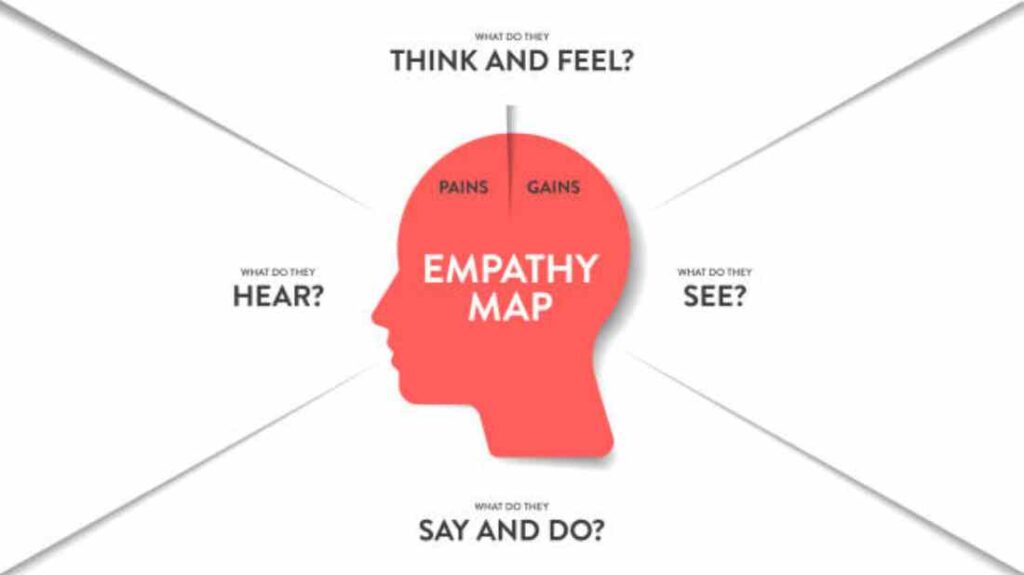
- Empathy Mapping: Document what your customers say, think, feel, and do
- Customer Journey Emotional Mapping: Identify emotional highs and lows throughout their experience
- Social Listening Analysis: Use tools to analyze unprompted conversations about pain points
- Qualitative Interviews: Conduct one-on-one conversations focusing on emotional drivers
Phase 2: Strategy Development
Translate insights into actionable strategies:
- Emotional Positioning: Define how your brand makes customers feel
- Content Pillars Based on Emotional Needs: Organize content around identified emotional states
- Tone of Voice Guidelines: Establish compassionate communication standards
- Values Alignment Plan: Connect brand purpose with customer values
Phase 3: Implementation
Execute with consistency across touchpoints:
- Personalized Content Creation: Develop materials addressing specific emotional states. Personalized campaigns can also benefit from programmatic advertising, which can help deliver relevant messages to audiences based on their interests, behaviors, and context.
- Empathetic Customer Service Protocols: Train teams in compassionate response techniques
- Community Building Initiatives: Create spaces for authentic connection
- Feedback Integration Systems: Implement closed-loop feedback processes
Phase 4: Measurement & Optimization
Track emotional connection metrics:
- Emotional Engagement Scores: Measure shares, comments, and sentiment
- Trust Indicators: Monitor repeat purchases and referral rates
- Customer Effort Scores: Evaluate how easy you make customers’ lives
- Qualitative Feedback Analysis: Regularly assess emotional impact
Case Studies: Brands Excelling at Empathetic Marketing
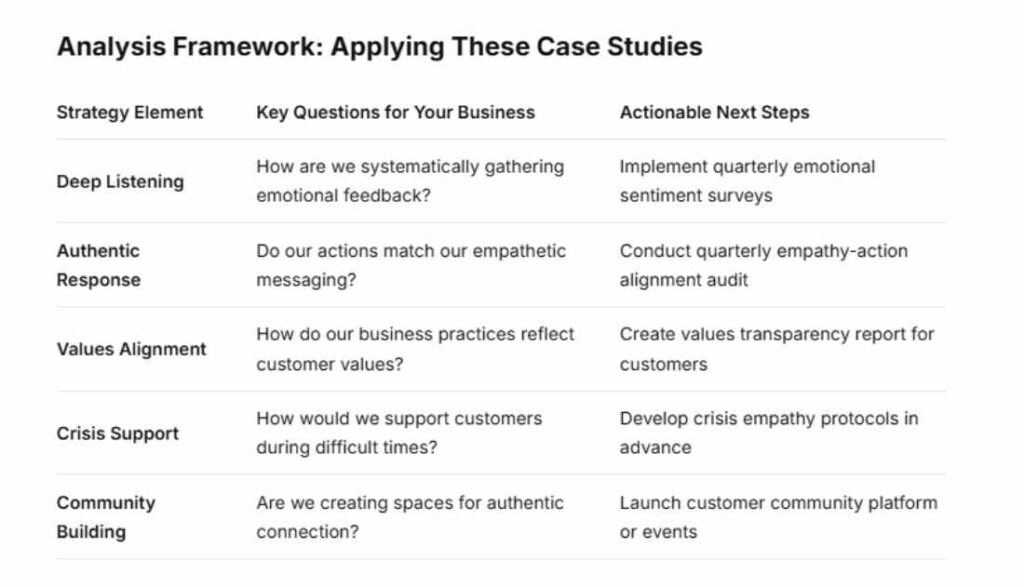
Empathetic Marketing Case Studies: 5 Brands That Master Emotional Connection
Here are detailed case studies in table form showcasing how leading brands have successfully implemented empathetic marketing strategies:
Technology & E-commerce
| Brand | Challenge | Empathetic Strategy | Key Actions | Results | Key Takeaway |
| eBay | Small businesses struggling during COVID-19 lockdowns with no digital presence | “Up & Running” Emergency Business Support Program | • Free eBay store setup assistance • Marketing credits & fee waivers • Dedicated onboarding specialists • Extended support periods |
• Supported 100,000+ small businesses • Generated 92% positive sentiment • Increased long-term seller retention by 34% |
Addressing immediate survival needs builds lifetime loyalty and brand advocacy |
| WeTransfer | Creators feeling isolated and uncertain about industry changes | Annual “Ideas Report” Community Research Initiative | • Yearly global survey of 10,000+ creators • Publicly shared insights report • Product development informed by findings • Community spotlight features |
• 78% of surveyed creators felt “seen and understood” • Product improvements driven by direct feedback • Strengthened premium conversion rates |
Consistent, public listening demonstrates genuine commitment beyond marketing |
Retail & Consumer Goods
| Brand | Challenge | Empathetic Strategy | Key Actions | Results | Key Takeaway |
| Lush Cosmetics | Consumer skepticism about corporate ethics and greenwashing | Radical Transparency & Ethical Sourcing Campaign | • “Who Made Your Product?” labels with faces & stories • Charitable giving built into pricing model • Transparent ingredient sourcing maps • Campaigns supporting social causes |
• 40% higher customer loyalty than industry average • Price premium acceptance 3x industry norm • Consistently high ethical brand rankings |
Aligning operations with values proves empathy is authentic, not performative |
| Patagonia | Customers concerned about environmental impact of consumption | “Don’t Buy This Jacket” & Worn Wear Initiative | • Anti-consumption messaging during Black Friday • Free repair services for all products • Used gear marketplace • Environmental activism funding |
• Increased sales despite anti-consumption message • 89% customer retention rate • 142% revenue growth over 5 years |
Challenging your own business model for shared values builds ultimate trust |
Service & Travel Industries
| Brand | Challenge | Empathetic Strategy | Key Actions | Results | Key Takeaway |
|---|---|---|---|---|---|
| JetBlue | Air travel frustration and negative industry perceptions | “Humanity Above All” Relatable Content Series | • “How Not To…” video series acknowledging travel pains • Transparent communication during delays • Crew empowerment for compassionate exceptions • Customer recovery focus groups |
• 22% increase in positive social sentiment • 15% improvement in customer satisfaction scores • Higher repeat booking rates despite premium pricing |
Validating negative experiences with humor and solutions builds authentic connection |
| REI | Members feeling disconnected from outdoor community | #OptOutside & Cooperative Community Programs | • Closing stores on Black Friday • Paid employee day off for outdoor activities • Local adventure workshops • Gear rental programs lowering barriers to entry |
• 2.7 million people participated in #OptOutside • 28% increase in membership signups • 40% higher engagement with community events |
Creating shared experiences around values builds stronger bonds than transactions |
B2B & Software
| Brand | Challenge | Empathetic Strategy | Key Actions | Results | Key Takeaway |
| Mailchimp | Small business owners feeling overwhelmed by marketing complexity | “Made for You” Personalized Onboarding | • Tone-matching in all communications • Failure-friendly learning environment • Celebration of small milestones • Human-first error messages |
• 45% reduction in early-stage churn • 60% increase in feature adoption • 3.2x higher NPS scores from personalized onboarding group |
Meeting users at their emotional state reduces anxiety and builds capability |
| Slack | Remote teams struggling with isolation and communication gaps | “Better Way to Work” Emotional UX Design | • Delightful micro-interactions and animations • Expressive reaction emojis • “Don’t worry, we’ve got this” error handling • Focus on reducing workplace stress |
• 93% user satisfaction with “emotional experience” • 42% faster team bonding in new setups • Industry-leading retention in competitive market |
Designing for emotional needs creates addictive, sticky products |
Financial Services
| Brand | Challenge | Empathetic Strategy | Key Actions | Results | Key Takeaway |
| Amex | Small business financial stress and cash flow anxiety | “Shop Small” & “Stand By You” Support Campaigns | • Fee waivers during COVID lockdowns • Extended payment terms without penalty • Local business spotlight program • Financial wellness resources |
• 85% small business customer retention through crisis • 63% increase in local partnership activations • Highest small business satisfaction scores in industry |
Supporting business survival during crisis creates permanent brand allegiance |
| H&R Block | Tax anxiety and confusion among filers | “You Got This” Confidence-Building Campaign | • Plain language explanations of complex topics • Empathetic anxiety-reducing messaging • “No Judgment” guarantee for all filers • Free second look reviews |
• 27% increase in new customer acquisition • 41% reduction in support call volume • Highest customer satisfaction in 10 years |
Reducing fear and building confidence in stressful situations creates loyal advocates |
Actionable Tips for Small Businesses
1. Start with Listening Systems
- Implement simple feedback loops: post-purchase surveys, social media polls
- Monitor review platforms for emotional language patterns
- Create customer advisory panels for ongoing input
Small businesses can simplify these processes by using the free marketing tools available for startups to collect feedback, monitor conversations, and better understand customer needs.
2. Develop Empathetic Content
- Use customer language rather than corporate jargon
- Address fears and aspirations directly in messaging
- Share behind-the-scenes content showing your human side
3. Train Your Team in Emotional Intelligence
- Implement regular empathy training sessions
- Create response templates that validate before solving
- Empower frontline staff to make compassionate exceptions
4. Personalize at Scale
- Segment audiences by emotional needs rather than just demographics
- Create content variations addressing different emotional states
- Use automation to deliver timely, relevant empathetic messages
Small businesses can also extend their reach through affiliate marketing, especially when working with partners who genuinely understand and connect with the same audience.
5. Measure Emotional Metrics
- Track sentiment alongside traditional engagement metrics
- Conduct periodic emotional connection surveys
- Monitor complaint resolution satisfaction specifically
Common Pitfalls and How to Avoid Them
Performative Empathy
Problem: Expressing care without supportive action
Solution: Ensure every empathetic message connects to tangible support
Example: Instead of just saying “we’re here for you,” offer extended returns during difficult times
Cultural Insensitivity
Problem: Misreading emotional cues across different groups
Solution: Include diverse perspectives in strategy development
Example: Test messaging with representative audience samples before broad campaigns
Empathy Fatigue
Problem: Emotional marketing that overwhelms rather than supports
Solution: Balance empathetic content with practical solutions and positivity
Example: Follow emotionally heavy content with hopeful, actionable next steps
Inconsistency
Problem: Empathetic marketing that conflicts with other brand experiences
Solution: Audit all touchpoints for emotional alignment
Example: Ensure compassionate social media matches customer service experiences
The Future of Empathetic Marketing
As artificial intelligence and automation become increasingly sophisticated, the human element of marketing grows more valuable. Forward-thinking brands will:
- Combine AI insights with human interpretation: Use technology to detect emotional patterns but rely on human judgment for nuanced understanding
- Develop empathy at organizational levels: Make emotional intelligence a core competency across departments
- Create adaptive emotional content: Develop messaging that responds to real-time emotional states
- Build empathetic brand ecosystems: Partner with complementary brands that share empathetic values
A strong digital presence is another important part of that ecosystem, and a well-planned small business web design project can ensure that the empathy expressed in your marketing is reflected throughout the customer experience.
Getting Started: Your 30-Day Empathy Implementation Plan
Week 1: Foundation
- Conduct emotional audit of current marketing materials
- Implement one new listening channel (social listening tool or simple survey)
- Identify three key emotional pain points from existing customer feedback
Week 2: Strategy Development
- Create empathy map for your primary audience segment
- Develop emotional tone guidelines for your team
- Plan one piece of content addressing a specific emotional need
Week 3: Initial Implementation
- Publish your first empathetic content piece
- Train team on basic empathetic response techniques
- Implement emotional language tracking in your analytics
Week 4: Assessment & Planning
- Analyze emotional response to your new approach
- Gather team feedback on implementation challenges
- Plan Q2 empathetic marketing initiatives based on learnings
Conclusion
Empathetic marketing represents a fundamental shift from transactional to relational business. In an era of digital overload and increasing consumer sophistication, brands that genuinely understand and address emotional needs will build the durable trust necessary for long-term success. This approach requires ongoing commitment, authentic implementation, and organizational alignment, but the rewards—deep customer loyalty, meaningful differentiation, and sustainable growth—make this investment in human connection profoundly valuable.
The most successful modern brands recognize that behind every data point is a human experience, and behind every transaction is an emotional journey. By making empathy your marketing foundation, you transform customers into community members, transactions into relationships, and brand messaging into meaningful conversations.
Saba Mirza is a Technology, Business & Digital Marketing Writer at Lead Loom Web with 3+ years of writing experience. Her work covers technology, digital marketing, SEO, business growth, artificial intelligence and emerging digital trends.
Author Profile →
Sameena Begum is a health, technology, and digital content reviewer who reviews selected articles to help ensure that information is presented clearly, accurately, and responsibly.
Reviewer Profile →