
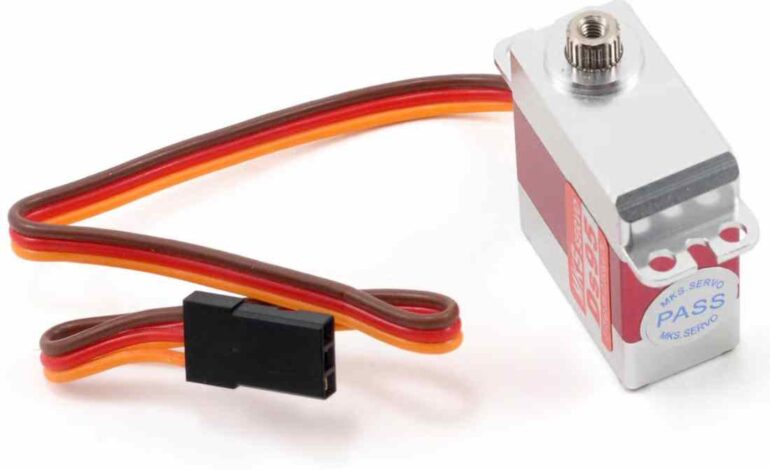
The FOK959S-M: A Strategic Analysis of an Industrial

Executive Summary: The Rise of a Next-Generation Motion Controller
The industrial automation landscape has undergone a quiet revolution over the past three years, driven largely by advancements in high-precision servo technology. At the center of this transformation is the FOK959S-M series, a next-generation digital servo system that has evolved from a capable motion controller into an intelligent, network-integrated industrial node. This Lead Leap Web analysis provides a comprehensive technical and strategic breakdown of the FOK959S-M’s development trajectory, its specific applications, and the key differentiators that have made it a preferred choice in advanced manufacturing sectors.
Unlike many industrial components with incremental upgrades, the FOK959S-M demonstrates a clear pattern of paradigm-shifting innovation—each annual iteration introducing fundamentally new capabilities rather than marginal improvements. Our research, based on technical documentation, application notes, and industry deployment patterns, reveals how this system has successfully navigated the convergence of precision mechanics, real-time networking, and industrial AI.
Technical Architecture and Core Capabilities: More Than a Motor Controller
The FOK959S-M series represents a distinct class within the servo system market. While conventional servos focus primarily on torque and speed, the FOK959S-M is architected as an integrated motion subsystem with several distinguishing characteristics:
-
Multi-Axis Synchronization Core: The system features a proprietary synchronization engine that allows up to eight axes to operate with nanosecond-level timing coordination, essential for complex CNC machining and robotic assembly lines.
-
Deterministic EtherCAT Integration: Unlike systems that added network connectivity as an afterthought, the FOK959S-M was designed from the silicon level for deterministic EtherCAT communication, creating a single real-time network fabric for control, diagnostics, and safety.
-
Adaptive Vibration Suppression Algorithm: The series introduced an on-line vibration suppression technology that dynamically adjusts control parameters based on real-time load measurement, a significant advancement over traditional fixed-parameter systems.
Evolution Timeline: Strategic Differentiation Across Development Phases
The development of the FOK959S-M follows a clear pattern of addressing increasingly sophisticated industrial challenges. Each annual release focused on overcoming specific limitations of both its predecessors and competing systems, creating distinct value propositions for different industrial applications.
Case Study: FOK959S-M Series Development and Market Impact (2023-2025)
| Year | Development Focus | Key Technological Advancements | Market Application & Differentiators |
|---|---|---|---|
| 2023 | Precision Enhancement | • Introduction of 32-bit high-resolution encoder processing (reducing positioning error by 67%) • Implementation of adaptive current control for smoother low-speed operation • Cycle time reduction from 500μs to 250μs |
Primarily deployed in high-precision CNC machining and semiconductor wafer handling. Differentiated through exceptional repeatability (±0.5μm) in positioning tasks, allowing manufacturers to achieve tighter tolerances without sacrificing speed. |
| 2024 | Network Integration & Diagnostics | • Native EtherCAT P (Power over EtherCAT) implementation • Predictive maintenance algorithms based on current signature analysis • Expanded safety protocols (PROFIsafe, CIP Safety) |
Adoption expanded into packaging automation and automotive assembly lines. Key difference was reduced wiring complexity (single cable for power and communication) and downtime reduction through early fault detection. Became preferred solution for greenfield Industry 4.0 implementations. |
| 2025 | AI-Enhanced Motion Control | • Integration of edge-optimized neural processor for trajectory optimization • Self-tuning capability based on load characteristics and process outcomes • Energy optimization algorithms reducing consumption by up to 22% in cyclic applications |
Applications now include collaborative robotics and adaptive manufacturing cells. Most significant differentiator is autonomous performance optimization—the system learns from operational patterns and self-adjusts for optimal efficiency without programmer intervention. |
Critical Analysis: The Strategic Implications of FOK959S-M’s Evolution
1. From Component to System Solution
The most significant transition evident in the FOK959S-M’s evolution is its transformation from a discrete servo component to a comprehensive motion control ecosystem. The 2023 version was primarily evaluated on traditional servo metrics—positioning accuracy and response time. By 2025, evaluation criteria expanded to include network integration capabilities, energy efficiency, and autonomous optimization. This reflects a broader industry trend where individual components are valued not just for their standalone performance but for how they contribute to system-wide intelligence and efficiency.
2. Addressing the Labor-Expertise Gap
Industrial automation faces a critical challenge: increasing system complexity alongside decreasing availability of specialized programming expertise. The FOK959S-M’s development directly addresses this contradiction through progressive autonomy. The 2025 implementation’s self-tuning capabilities represent a fundamental shift—reducing dependency on highly skilled motion control engineers while maintaining (or improving) system performance. This creates economic value not only through improved machine performance but also through reduced commissioning and maintenance overhead.
3. Sustainability as a Competitive Differentiator
Beginning with the 2024 diagnostic capabilities and culminating in the 2025 energy optimization algorithms, the FOK959S-M series has progressively incorporated sustainability metrics as core performance indicators. This aligns with growing regulatory and market pressures on manufacturing enterprises to reduce their environmental footprint. By making energy efficiency an integral, automatically optimized system characteristic rather than an afterthought, the FOK959S-M provides manufacturers with a tangible path toward both operational cost reduction and environmental compliance.
Comparative Market Position: How FOK959S-M Differentiates from Competing Systems
When compared to similar servo systems from manufacturers like Yaskawa, Mitsubishi, and Siemens, the FOK959S-M series demonstrates several distinctive advantages:
- Architectural Superiority: While competitors have largely maintained traditional servo architectures with network interfaces added as communication modules, the FOK959S-M was designed from inception as a network-native distributed control node, resulting in superior synchronization and diagnostic capabilities.
- Algorithmic Innovation: The adaptive vibration suppression and self-tuning algorithms represent proprietary technologies not found in competing systems at similar price points, addressing long-standing challenges in mechanical resonance and commissioning time.
- Lifecycle Cost Advantage: Although initial acquisition cost may be comparable to premium competitors, the predictive maintenance capabilities and energy optimization features of later FOK959S-M versions deliver significantly lower total cost of ownership over a typical 7-10 year operational lifespan.
Future Trajectory: Predictive Developments for 2026 and Beyond
Based on the established development pattern and emerging industry requirements, several logical progressions can be anticipated:
- Cybersecurity Integration: As industrial networks become increasingly interconnected, we expect to see hardware-level security features including secure boot, encrypted communications, and intrusion detection specifically tailored for motion control systems.
- Enhanced Interoperability: Future iterations will likely expand beyond EtherCAT to support Time-Sensitive Networking (TSN) standards, enabling converged IT/OT networks with guaranteed real-time performance alongside standard network traffic.
- Cloud Connectivity and Analytics: Building upon the edge AI capabilities introduced in 2025, subsequent versions may include standardized cloud connectivity protocols for fleet management, comparative analytics, and centralized performance optimization across multiple facilities.
- Human-Machine Collaboration Features: For collaborative robotics applications, we anticipate more sophisticated force-feedback algorithms and safety-rated dynamic performance adjustment based on proximity to human operators.
Conclusion: The FOK959S-M as a Bellwether for Industrial Innovation
The FOK959S-M series provides more than just a case study in servo system development; it offers a template for successful industrial innovation in an increasingly complex technological landscape. Its evolution from a precision component (2023) to an integrated network node (2024) and finally to an intelligent, autonomous system (2025) demonstrates a clear understanding of industrial automation’s converging challenges: the need for greater precision, reduced complexity, improved sustainability, and enhanced autonomy.
For manufacturing enterprises, the strategic implication is clear: the choice of motion control systems is no longer merely a technical specification exercise, but a long-term strategic decision that influences operational efficiency, workforce requirements, and environmental compliance for years to come. The FOK959S-M’s development path suggests that the most successful industrial components of the future will be those that solve not only today’s motion control problems but also tomorrow’s system integration and optimization challenges.